Hanal Pixán: Yucatán’s Food for the Souls
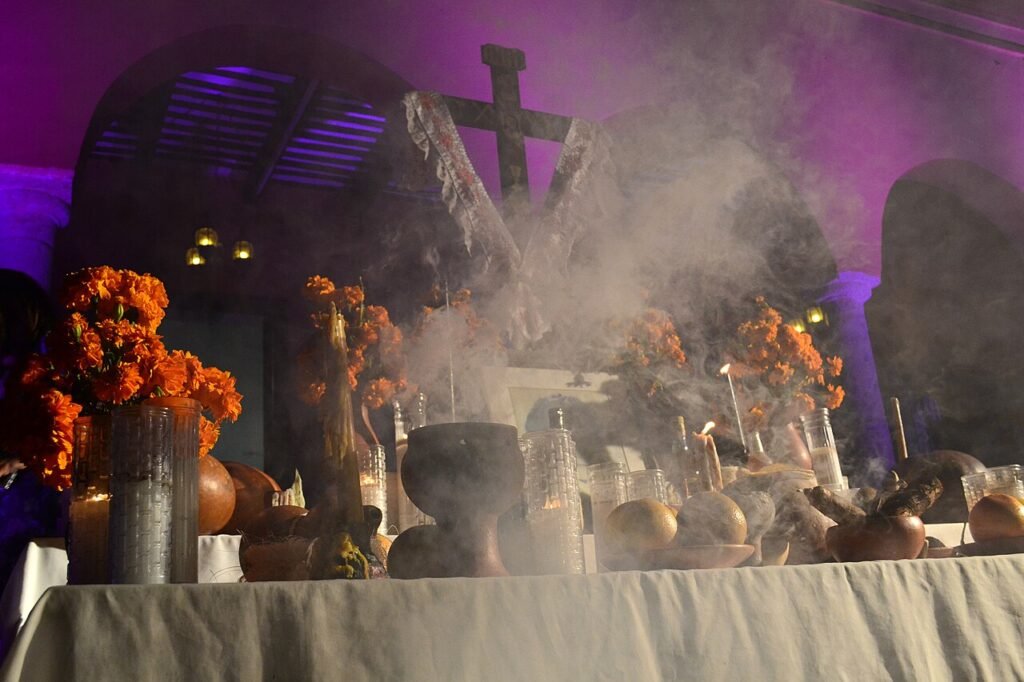
Foto: Ivan Alexis Huerta Reyna, “Altar de muertos en el Hanal Pixán”, CC BY-SA 4.0

Every year, as October comes to an end, homes across Yucatán fill with the smell of corn dough, achiote and wood smoke. Families set tables with white cloths, candles and photographs. Hanal Pixán, the Maya celebration that honors the dead, has begun.
The words come from the Maya language: hanal means food and pixán means soul. Hanal Pixán is “food for the souls”, the days when departed loved ones are believed to return and share a meal with the living. While the rest of Mexico celebrates Día de Muertos, Yucatán keeps its own version of the tradition, one where pre-Hispanic Maya beliefs and Catholic customs have blended for centuries.
When is Hanal Pixán celebrated?
The celebration lasts three days, and each one has its own meaning:
- October 31 is dedicated to children who have passed away. Their altars carry bright colors, candy and toys.
- November 1 honors deceased adults, with their favorite dishes and drinks.
- November 2 closes the celebration with a mass offered for all souls, and the altars are restocked for children and adults alike.
The altar: a table set for the souls
The heart of Hanal Pixán is the altar, built to welcome the souls home. Traditional altars are arranged in levels that reflect the Maya view of existence: the underworld below, the world of the living in the middle and the heavens above. Common elements include:
- A table covered with a white tablecloth for adults, or a colorful one for children.
- A green cross, representing the ceiba, the sacred tree of life.
- Incense, whose light and aroma guide the souls toward the food.
- Salt and water, symbols of purification.
- Candles, flowers and photographs of the deceased.
There is one detail visitors often find striking: a photograph is placed on the altar only a full year after the person has passed away. Before that, tradition says, the spirit cannot yet make the journey back. And the food on the altar is left untouched until the next day, once the souls have enjoyed it first.
Mucbipollo, the dish that defines the celebration
No Hanal Pixán is complete without mucbipollo, also called pib. It looks like a giant round tamale: corn dough filled with chicken, achiote, tomato, onion and spices, wrapped in banana leaves. Its Maya name means “what must be buried”, and that is exactly how it is cooked. Families dig a pit in the backyard, light a wood fire and bake the pib underground, a method that gives the dish its unmistakable flavor.
Mucbipollo is more than a meal. Preparing it is a ritual that brings the whole family together, and sharing it keeps the bond between the living and the dead alive. Many families add black beans (espelón) and k’ool, a thick sauce of corn dough, chicken broth and spices. Recipes vary from one household to the next, and every Yucatecan will tell you their grandmother’s is the best.
How is it different from Día de Muertos?
Both celebrations share altars, cemetery visits and the belief that the dead return for a few days. But Hanal Pixán has a character of its own. The sugar skulls and imagery made famous by films like Coco come from central Mexico. In Yucatán the celebration speaks Maya: in its name, in its food and in customs like the pib baked underground. Even within the peninsula there are regional variations. In Pomuch, Campeche, families clean the bones of their relatives and display them on an altar, a custom found nowhere else.
Experiencing Hanal Pixán in Mérida
Late October and early November are a beautiful time to visit Yucatán. In Mérida, altar exhibitions and competitions fill plazas and cultural venues, and cemeteries receive families who clean and paint the tombs of their loved ones. In recent years the city has also held the Paseo de las Ánimas, a procession from the Pantéon Florido to the Ermita de Santa Isabel, with many participants in traditional dress and skull makeup. Public events change from year to year, so check the local calendar before your trip.
A few tips for visitors: altars in homes are private family spaces, and public exhibitions are the right place to look and take photographs. If you are invited to share mucbipollo, accept. It is an honor.
Plan your trip to Yucatán
Hanal Pixán is one of the most meaningful seasons to discover the peninsula, and it pairs perfectly with visits to the archaeological sites, cenotes and haciendas nearby. At Mayan Excursions we run private transportation and custom itineraries across Yucatán, for individual travelers and for travel agencies looking for a reliable local operator. Write to us on WhatsApp at +52 999 228 8103 and we will help you plan it.